What Are the Emotional Support Animal (ESA) Laws in Florida?
August 02, 2024
February 12, 2026

Medical Context Reviewed By:
Dr. Perry Payne
Perry W. Payne, Jr., MD, JD, MPP
Dr. Perry Payne
Attorney & Physician with expertise in health law and disability policy

In this comprehensive guide, we’ll discuss Florida ESA laws, covering housing rights, public access rules, and essential tips for ESA owners in Florida. Whether you’re new to ESA ownership or looking to move to Florida with your emotional support animal, this guide will provide the clarity you need.

What Are the Emotional Support Animal Housing Laws in Florida?
In Florida, emotional support animals are protected under state and federal laws, specifically the Fair Housing Act (FHA). These laws ensure that individuals with mental or emotional health needs can live with their ESAs, even in housing with “no-pets policies.” Landlords and housing providers must adhere to the following:
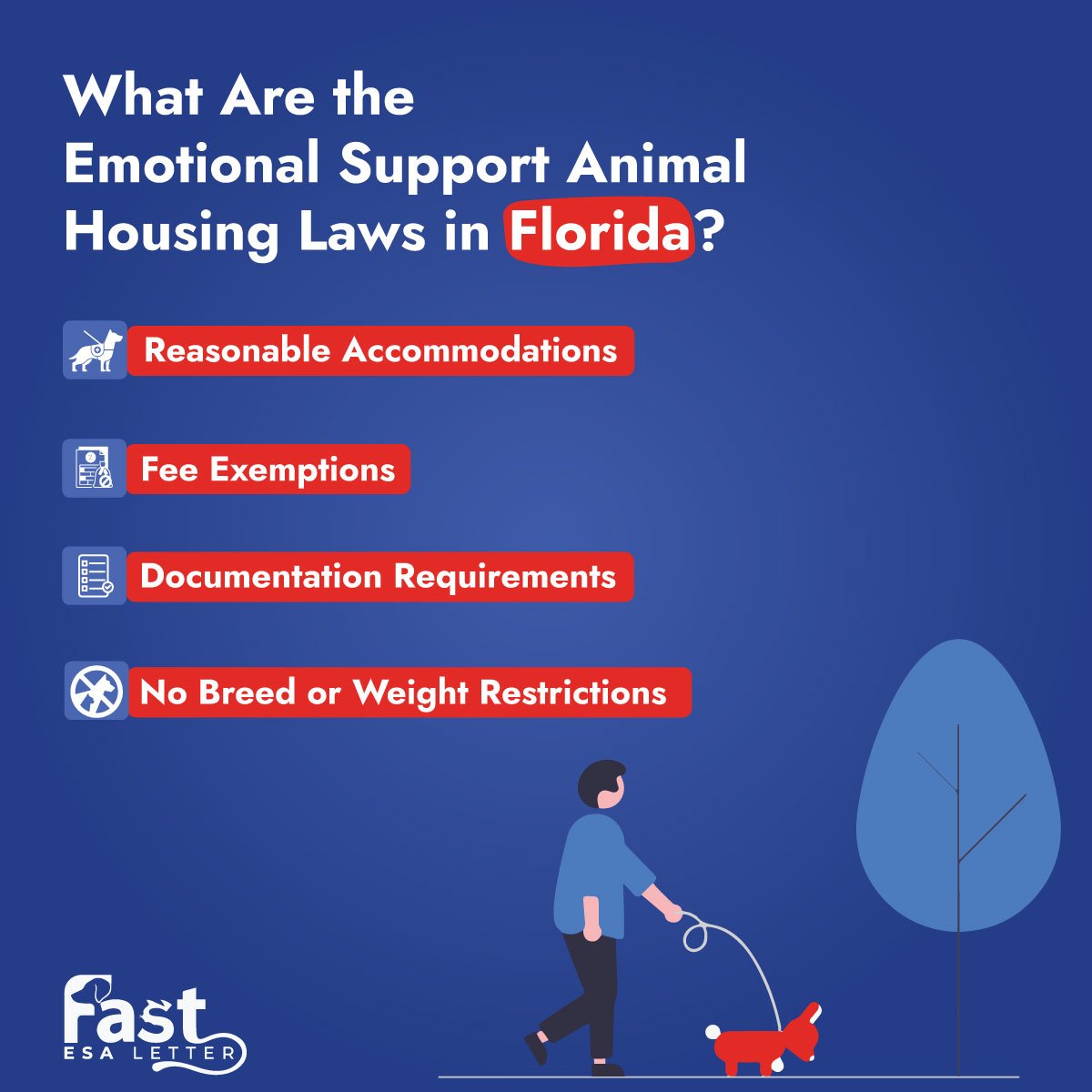
- Reasonable Accommodations: Under Florida ESA laws, landlords are required to make reasonable accommodations for tenants with valid ESA documentation, allowing them to keep their ESAs in rental properties. Refusing such accommodations constitutes a violation of the Fair Housing Act.
- Fee Exemptions: Housing providers cannot charge pet-related fees or higher rent for individuals with ESAs. However, if the ESA causes property damage, tenants may be held responsible for the cost of repairs.
- Documentation Requirements: Landlords may request an ESA letter from a licensed mental health professional, confirming the individual’s need for the animal to manage a disability. They cannot ask for detailed medical information.
- No Breed or Weight Restrictions: Florida state laws on emotional support animals prohibit landlords from imposing restrictions based on breed, size, or weight. However, landlords may deny a specific animal if it causes significant financial burden, including insurance related consequences such as cancelation of coverage or excessive premium increases.
Florida emotional support animal housing laws aim to protect renters’ rights and ensure equal opportunities in housing for individuals with disabilities.
What Florida ESA Laws Apply to Work Environments?
Access to workplaces for emotional support animals in Florida depends on employer policies and the circumstances of the employee requesting accommodation.
- Florida employees may request workplace accommodations for their ESA by providing a valid ESA letter. Employers are not obligated to allow ESAs, but accommodations may be granted if the ESA supports the employee’s mental or emotional health.
- Each company has unique policies on animals in the workplace. Familiarizing yourself with Florida workplace regulations for ESAs will help in making your case.
- Employers can deny requests if the ESA poses a safety risk, disrupts workflow, or creates undue hardship for the company.
What Are the ESA Laws for Travel in Florida?
Traveling with an emotional support animal in Florida involves understanding varying regulations across different modes of transportation. The following guidelines can help you prepare:
- Air Travel: Recent updates to the Air Carrier Access Act (ACAA) mean airlines are no longer required to accommodate ESAs. Most airlines, including those operating in Florida, classify ESAs as pets, and may charge fees or require ESAs to travel in carriers. It is essential to check your chosen airline’s policy ahead of time.
- Public Transit: Florida public transportation systems, such as buses, trains, and commuter rails, are not obligated to allow ESAs. Unlike service animals protected under the ADA, ESAs must adhere to the transit provider’s pet policies. Be sure to check with local transit authorities.
- Rideshares and Taxis: Companies like Uber and Lyft are not required to allow ESAs in Florida, though service animals are protected by law. Drivers have the discretion to permit ESAs in their vehicles. To avoid inconvenience, it’s recommended to notify the driver or check directly with the service provider when booking.
When traveling with your emotional support animal in Florida, planning ahead and ensuring compliance with specific ESA travel regulations for each mode of transport will minimize issues and ensure a seamless journey.
What Are Public Access Laws for ESA in Florida?
Public access laws for emotional support animals in Florida differ significantly from those for service animals under the Americans with Disabilities Act (ADA). This means Florida ESA laws do not guarantee public access rights for emotional support animals in venues such as hotels, restaurants, or stores. However, many pet-friendly places in Florida may allow ESAs. Therefore, it is advisable to contact the establishment in advance.
Pet-Friendly Places in Florida Where You Can Bring Your Emotional Support Animal:
- Gaspar’s Grotto, Tampa: This Ybor City restaurant welcomes well-behaved dogs on its patio, offering a lively atmosphere for you and your ESA.
- Lake Baldwin Park, Winter Park: A 23-acre lakeside park where dogs can run off-leash during designated hours, featuring a beach, picnic areas, and a boat ramp.
- Fort De Soto Park, Tierra Verde: Renowned for its dog-friendly beach and Paw Playground, allowing dogs to swim and play off-leash in designated areas.
- Bonita Beach Dog Beach, Bonita Springs: An off-leash beach near the Fort Myers/Bonita Springs line where dogs can enjoy the Gulf waters freely.
- Pizza Rustica, Delray Beach: This eatery permits pets to join their owners in the sidewalk seating area, offering a pet-friendly dining experience.

What to Do If Your Landlord Refuses Your ESA in Florida?
Are Emotional Support Animals Allowed in Florida Schools or Colleges?
Florida ESA laws do not grant automatic access to ESAs in schools. However, different institutions have specific policies:
- Colleges & Universities: Under ESA laws in Florida, some colleges allow ESAs in on-campus housing as part of Florida housing law emotional support animals protections. You need a valid ESA letter from a licensed mental health professional and should consult the school’s disability office for their specific process.
- K-12 Schools: Florida state laws on emotional support animals do not require public schools to accept ESAs, except for trained service animals. However, parents can request accommodations if an ESA is crucial for their child’s well-being.
How to Get a Legitimate ESA Letter in Florida?
- Consult a Licensed Professional: Schedule an appointment with a mental health expert familiar with Florida ESA laws.
- Discuss Your Needs: Explain how an ESA supports your mental health.
- Obtain a Valid ESA Letter: If approved, your licensed provider with personal knowledge of your disability will issue a Florida ESA letter that aligns with emotional support animal Florida rental laws.
Important to Know:
Under Florida law, online certificates, ID cards or registrations alone do not qualify for valid documentation and cannot be used to establish the need for an emotional support animal.

Conclusion
Frequently Asked Questions
Do Florida Landlords Have To Accept Emotional Support Animals?
Can A Landlord Ask For Proof Of My Emotional Support Animal In Florida?
Are Emotional Support Animals Allowed In Hotels In Florida?
No, under the emotional support animal laws Florida hotels are not obligated to accept ESAs. However, many pet-friendly hotels may accommodate ESAs. It is recommended to check the hotel’s policy in advance.
What Happens If I Falsely Claim My Pet As An ESA In Florida?
Post Author

Prince Sharma
Related Articles

HUD Update May 2026: Are ESA Letters Still Valid for Housing?
HUD Update May 2026: Are ESA Letters Still Valid for Housing?Getting an ESA letter in California isn’t instant. Here’s how to legally qualify, meet AB 468 requirements, and protect your housing rights in 2026.Published October 19, 2026Last Updated...

What Are the Emotional Support Animal Laws in Indiana?
What Are the Emotional Support Animal Laws in Indiana?Under the Fair Housing Act, emotional support animals in Indiana must be permitted in housing, even where pets are normally prohibited. Landlords cannot impose pet fees, deposits, or breed and...

What Are the Emotional Support Animal Laws in Utah?
What Are the Emotional Support Animal Laws in Utah?In Utah, emotional support animals (ESAs) are protected under federal laws like the Fair Housing Act, which allows them in housing without pet fees, even in no-pet policies. However, ESAs are not...